
Regenerative Agriculture and the Future of Food
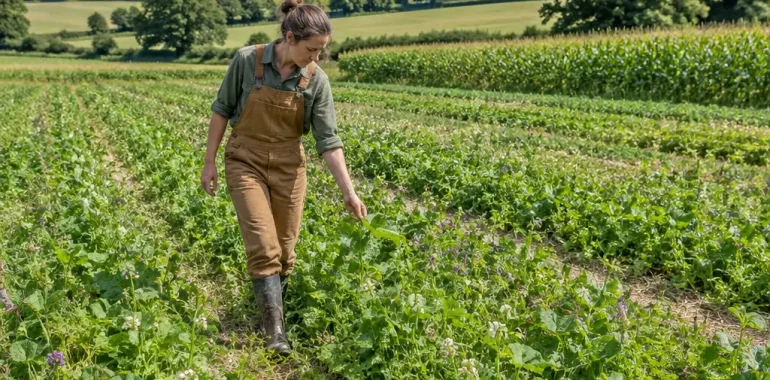
Regenerative Agriculture and the Future of Food
Regenerative agriculture is a set of farming approaches intended to restore soil health and strengthen the ecological processes that support food production. It can include practices such as cover cropping, reduced tillage, diverse crop rotations, agroforestry, and managed grazing, but there is no single universally accepted definition or certification standard. Its importance is growing as agriculture faces climate and biodiversity pressures: the Intergovernmental Panel on Climate Change estimates that agriculture, forestry, and other land use accounted for about 22% of global human-caused greenhouse-gas emissions in 2019. Regenerative practices may improve soil structure, reduce erosion, and support habitat, though results vary by place and management. This article explains the core principles, evidence and limitations, food-system implications, and practical ways to assess progress.
Regenerative agriculture practices and soil health
Regenerative agriculture is best understood as an outcome-oriented approach rather than a fixed recipe. The Food and Agriculture Organization of the United Nations describes sustainable soil management as practices that maintain or improve soil functions without impairing other ecosystem services. Regenerative agriculture commonly builds on that idea, emphasizing measurable improvement in soil condition, biodiversity, water cycling, and farm resilience. The term is used in research, farming, and food marketing, but definitions differ, so claims should be assessed against specific practices and measured outcomes.
Soil health and organic matter
Soil health is the capacity of soil to function as a living system that sustains plants, animals, and people. The U.S. Department of Agriculture’s Natural Resources Conservation Service evaluates it through physical, chemical, and biological indicators, including soil structure, nutrient availability, and organism activity. Regenerative strategies often seek to protect soil from erosion, maintain roots in the ground for more of the year, and increase organic inputs. These goals matter because the FAO estimates that around 33% of the world’s soils are moderately to highly degraded.
Soil organic carbon is one important indicator, but it is not a complete measure of soil health. A 2020 review in Global Change Biology found that practices such as cover cropping and reduced tillage can increase soil carbon in some settings, while gains depend on climate, soil type, duration, and management. Carbon can also accumulate near the surface without a comparable increase through the full soil profile. Reliable evaluation therefore requires repeated measurements at consistent depths, alongside indicators such as aggregate stability, infiltration, and erosion.
Cover crops and living roots
Cover crops are plants grown primarily to protect and improve soil between or alongside cash crops, rather than for harvest. Grasses, legumes, and brassicas can help cover exposed soil, capture nutrients, provide roots and residues, and—in the case of some legumes—add biologically fixed nitrogen. A U.S. Department of Agriculture review of cover-crop research reports benefits including reduced soil erosion and improved soil organic matter, while noting that outcomes depend on species, timing, and local conditions.
Cover crops can also bring trade-offs. They may use water needed by a following crop in dry regions, require extra seed and labor, or complicate planting schedules. Their value is strongest when farmers select species and termination dates to fit local rainfall, soil, and crop rotations rather than treating cover cropping as a universal prescription.
Reduced tillage and crop diversity
Reduced tillage limits soil disturbance, while no-till systems plant crops with little or no prior soil turning. Crop diversification adds different crops across a rotation or field, which can interrupt pest cycles and vary the timing and depth of root growth. These approaches can reduce erosion and fuel use, but reduced tillage alone does not guarantee better soil outcomes; residue management, weed control, crop choice, and local conditions also matter.
A 2020 meta-analysis in Nature Sustainability found that diversified farming practices—including rotations and cover crops—generally improved multiple ecosystem services without reducing yields on average, although results differed among practices and locations. This evidence supports combining practices thoughtfully rather than assuming that any single technique will deliver all desired benefits.
Regenerative agriculture outcomes and climate resilience
Farm practices are means; outcomes are the results that matter. Researchers and farmers commonly assess regenerative outcomes through soil condition, water movement, biodiversity, emissions, yields, and farm economics. The distinctions are important: adopting a practice does not by itself prove that environmental conditions improved, and improvement in one measure may come with costs or changes in another.
Carbon storage and greenhouse-gas emissions
Soils can store carbon when plant-derived carbon enters the soil faster than it is lost through decomposition and disturbance. The National Academies of Sciences, Engineering, and Medicine has emphasized that soil-carbon storage is limited, reversible, and highly dependent on local conditions. It should therefore complement—not replace—rapid reductions in fossil-fuel emissions and other agricultural greenhouse gases, including methane and nitrous oxide.
The IPCC’s 2022 assessment states that agriculture, forestry, and other land use produced approximately 22% of global net human-caused greenhouse-gas emissions in 2019. Regenerative methods may contribute to mitigation, but claims should account for emissions across the whole farm and supply chain. For example, reducing tillage may lower fuel use, while poorly timed nitrogen applications can still produce substantial nitrous oxide emissions.
Water quality, infiltration, and erosion
Healthy soil structure can help water enter the ground, remain available to crops, and move through the landscape more gradually. Practices that keep soil covered and reduce disturbance can limit runoff and sediment loss. The U.S. Environmental Protection Agency identifies agricultural runoff—including sediment and excess nutrients—as a significant source of water pollution in many watersheds.
Benefits depend on the field and watershed. Cover crops and vegetated field margins may reduce nutrient losses, but their effectiveness varies with slope, soil, rainfall, and nutrient management. Farm-level measurements such as infiltration tests and soil-cover records can be paired with stream or drainage monitoring to evaluate whether benefits extend beyond the field.
Biodiversity and habitat
Agricultural biodiversity includes soil organisms, pollinators, natural pest enemies, crops, livestock breeds, and non-crop habitat. Diverse rotations, hedgerows, agroforestry, and integrated livestock systems can create more varied habitats and food sources. The Convention on Biological Diversity’s global assessments identify land-use change, including agricultural expansion and intensification, as a major pressure on biodiversity.
More diverse fields are not automatically wildlife-friendly in every respect. Habitat quality, pesticide use, landscape context, and the species being considered all influence results. Monitoring pollinators, birds, beneficial insects, and soil biology can help farms distinguish measurable ecological change from general claims.
Regenerative agriculture systems and farm economics
Regenerative approaches are implemented through different farming systems. These include conservation agriculture, agroforestry, diversified crop rotations, integrated crop-livestock operations, and managed grazing. They overlap, but they are not interchangeable: each combines practices in different ways and responds to local soils, climate, markets, and labor availability.
Agroforestry and integrated crop-livestock systems
Agroforestry deliberately integrates trees or shrubs with crops or livestock. Trees can provide shade, wind protection, habitat, and products such as fruit or timber; roots can also influence soil and water processes. The USDA National Agroforestry Center identifies practices such as silvopasture, alley cropping, and windbreaks as established forms of agroforestry.
Integrated crop-livestock systems connect crop production with grazing or livestock enterprises. Livestock may use crop residues or cover crops, returning nutrients through manure, but stocking rates and grazing duration need careful management to prevent compaction, overgrazing, or nutrient losses. The system’s performance depends on balancing feed supply, animal welfare, soil protection, and market access.
Transition costs, yields, and resilience
A transition can involve new equipment, seed, technical advice, labor, and a period of learning. Farmers may face yield variability while changing rotations or weed-management systems, and they may need buyers willing to accept new crops. At the same time, diversified systems can spread risk across crops and seasons, and improved soil cover may help farms cope with certain weather extremes. These benefits are not guaranteed and should be evaluated against farm-specific costs and returns.
The USDA’s Economic Research Service has documented that conservation practices are shaped by factors such as farm size, operator resources, technical assistance, and expected profitability. Cost-share programs, transition financing, crop insurance design, and reliable markets can influence whether farmers can adopt and sustain practices. Effective policy therefore addresses both ecological goals and the practical economics of farming.
Regenerative agriculture measurement and accountability
Measurement helps farmers and food companies distinguish meaningful improvements from unverified marketing. Because regenerative agriculture lacks one universal definition, clear reporting should specify the practices used, the outcomes measured, the baseline, the time period, and the method. Claims about carbon or biodiversity should also state their boundaries and uncertainties.
Farm-level indicators and verification
A practical monitoring plan can combine soil tests with management records and ecological observations. Relevant measures include soil organic carbon, aggregate stability, infiltration, erosion, nutrient losses, crop yields, input use, and habitat indicators. Soil-carbon results are particularly sensitive to sampling depth, timing, and laboratory method, so comparisons are most meaningful when the same protocol is repeated over time.
Third-party certification can provide a common framework, but certification systems differ in their requirements and evidence. A label should not be treated as proof of every environmental benefit unless the standard explicitly measures those outcomes. Transparent reporting and independent verification are especially important when products make climate or ecosystem claims to consumers.
Food systems, consumers, and public policy
The future of regenerative agriculture depends on more than individual farm decisions. Food processors, retailers, lenders, governments, and consumers influence whether farmers can access technical support, transition funds, and dependable markets. Procurement programs can reward verified practices, while public extension services can help adapt methods to local conditions.
Consumers can look beyond broad claims and ask what a company means by “regenerative,” which practices it supports, and how it measures results. Policymakers can strengthen outcomes by funding long-term research, protecting water and habitat, and ensuring that incentives reach farms of different sizes and production systems.
Conclusion: regenerative agriculture and the future of food
Regenerative agriculture connects soil health practices with broader goals for climate resilience, water quality, biodiversity, and farm viability. Cover crops, reduced tillage, diverse rotations, agroforestry, and managed grazing can contribute to these goals, but no single practice guarantees success everywhere. The evidence points to context-specific results, the need for careful measurement, and the importance of pairing ecological ambition with workable farm economics.
For farmers, food businesses, and consumers, the next step is to favor transparent, locally appropriate programs with clear baselines and measurable outcomes. Supporting agricultural research, extension, and transition funding can help build food systems that restore natural resources while continuing to produce food. The chart or infographic accompanying this article could compare practice categories with indicators such as soil cover, erosion risk, water infiltration, biodiversity, and transition costs.
Sources: Intergovernmental Panel on Climate Change, Climate Change 2022: Mitigation of Climate Change, https://www.ipcc.ch/report/ar6/wg3/; Food and Agriculture Organization of the United Nations, Status of the World’s Soil Resources, https://www.fao.org/3/i5199e/i5199e.pdf; U.S. Department of Agriculture, Natural Resources Conservation Service, Soil Health, https://www.nrcs.usda.gov/conservation-basics/natural-resource-concerns/soils/soil-health; Poeplau, C. and Don, A., “Carbon sequestration in agricultural soils via cultivation of cover crops—A meta-analysis,” Global Change Biology, 2020, https://doi.org/10.1111/gcb.15071; Tamburini, G. et al., “Agricultural diversification promotes multiple ecosystem services without compromising yield,” Nature Sustainability, 2020, https://doi.org/10.1038/s41893-020-054 divers; National Academies of Sciences, Engineering, and Medicine, Negative Emissions Technologies and Reliable Sequestration: A Research Agenda, 2019, https://doi.org/10.17226/25259; U.S. Environmental Protection Agency, Nonpoint Source: Agriculture, https://www.epa.gov/nps/nonpoint-source-agriculture; Convention on Biological Diversity, Global Biodiversity Outlook 5, https://www.cbd.int/gbo5; U.S. Department of Agriculture, National Agroforestry Center, Agroforestry Practices, https://www.fs.usda.gov/nac/practices/; U.S. Department of Agriculture, Economic Research Service, Conservation Programs, https://www.ers.usda.gov/topics/natural-resources-environment/conservation-programs/.